

The arrival of Carlo Ancelotti at Everton has been accompanied by almost universal speculation that he has been provided with guarantees of a big transfer pot in which to shape his future squad.


As far as is possible, without getting too technical, I will try to explain the difficulties behind the assumption, then how possibly the situation can be mitigated.
Firstly, a quick look at how transfers in and out are calculated in accounting terms, then we need look at the regulatory restrictions currently surrounding the club and finally the treatment of further money poured into the club:
How transfers are accounted for:
We buy a player for £50 million, earning £5 million a year on a 5 year contract. How does that appear in the accounts?
The accounts take the transfer fee and spread it over the duration of the contract. So in this case the £50 million transfer fee is spread over 5 years creating a cost of £10 million a year (assuming no changes in contract length). Then his annual salary is added to the costs.
Thus in this case, the costs added to the profit and loss account each year for this player would be £15 million per annum.
If we sell a player then the treatment is slightly different. The profit or loss is calculated by calculating the price received for the player minus the remaining book value (remember in accounting terms the value of the player reduces each year as above)
So for example, a player bought for £20 million who is half way through his contract at Everton, but is sold for £30 million would generate a profit of £20 million in accounting terms (£30 million – £10 million). In addition, his future wages would obviously also disappear from future costs.
Everton’s current position:
Despite Moshiri’s capital injections in excess of £250 million, player trading profits approaching £200 million and extended credit facilities, the excesses and poor recruitment of the last 3.5 years has left Everton in a vulnerable position.
In order to understand our position and thus the likelihood of a large transfer pot for Ancelotti we must look at the Premier League rules surrounding loss-making clubs and assess our financial performance over the last three years including the current year 2019/20.
Profit & Sustainability Rules
These are the Premier League rules designed to keep a club from accumulating consistent and potentially unsustainable losses. They provide an explanation for what is included in the calculations and the consequences of breaking the limits.
The key figure is the maximum permitted losses amounting to £105 million over a three year period (including the current financial year) – rule E.59:


Adjusted Earnings


From the above definition the only costs that may be removed from the Profit & Sustainability calculations relate to women’s football expenditure, youth development expenditure (ie the academy) and any community development expenditure.
Other than the community development expenditure, Everton’s published accounts do not provide a breakdown of each figure.
Contrary to popular misconception the current costs associated with the development of Bramley-Moore charged to the profit and loss account are included in the Adjusted Earnings calculation. Currently for Everton, as until such a time as planning permission is granted these costs appear in the accounts as expenditure. Once planning permission is secured from an accounting point of view the costs are “capitalised” and the Profit & Loss account is adjusted for that purpose (i.e. the previously accounted expenses are added back in). Therefore currently those costs are included in the Premier League’s calculations.
How close to breaching rule E.59 are we?


At the time of writing the accounts for T-2 (2017/18) are published, T-1 (2018/19) are due to be published any day, and T is the current accounting period. Thus we need to look at projections for T-1 and T.
So before adjustment, actual and projected losses are as follows:
2017/18 : £13.07 million loss
2018/19: £95.00 million projected loss
2019/20: £35.00 million projected loss subject to any further player trading in and out.
Total projected losses for 3 years before adjustments: £143 million. It should be noted that my projection of losses in 2018/19 and this year are less than the projections of other similar analyses.
Regardless, that figure puts us well above the £105 million permitted losses even though the aggregate figure will be lower than £143 million because of the adjustments made for women’s football, the academy and community expenditures.
In addition, if planning permission is granted for Bramley-Moore before 30 June 2020 – the end of the current financial year) the accumulated costs to date (around £30-35 million) would therefore reduce the accumulated losses for the period.
Putting more funds into the club
So far we’ve not looked at how much cash is there to spend and how much cash (capital) will Moshiri be willing to put into the club to support Ancelotti.
Predicting the cash balance within the club is nigh on impossible particularly after at least one (possibly two) capital injection(s) by Moshiri in recent months and weeks. However it is fair to say that cash is limited and with current cash expenditure (wages, other operating costs and associated exceptional costs including Silva and Bramley-Moore) exceeding income, i.e. being cash flow negative, a continued and growing concern.
Some say that Moshiri will just continue to bankroll the club. Whilst him doing so would keep the club solvent and depending upon the scale of future investment provided funds for transfers (i) I think is extremely unlikely and (ii) doesn’t solve the profit and sustainability issues mentioned above. Capital injections do not solve the P&L account issues.
Why do I think it unlikely? Primarily due to the sums already invested and the future sums required for Bramley-Moore. Whilst a large element of the Bramley-Moore funding will be provided for by debt, a still substantial sum has to be raised from the majority shareholder. Additionally the primary lenders will wish to impose restrictions on Everton’s ability to spend over and above their income for a sustained period. (I will address the options for Bramley-Moore post the publication of the 2018/19 accounts).
What does this mean for Ancelotti (and indeed Brands)?
As things stand and assuming we wish to remain compliant with the Premier League rules, it is almost inconceivable that Ancelotti has a large transfer budget immediately available.
We have options though albeit relatively limited and/or undesirable.
We could choose to ignore the Premier League rules but the consequences of doing so may be wide and far reaching:
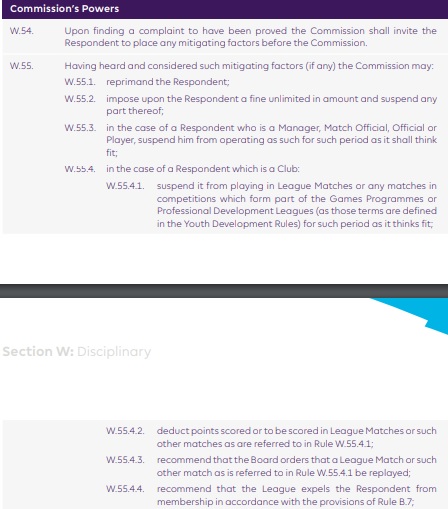

Alternatively, and I’ve mentioned it in previous podcasts, we can look to dispose of as many players as possible, not only including the “deadwood” to reduce the wage bill, but more effectively in the context of reducing losses, those players who we can sell at significant profits.
From a fans perspective, it hardly seems credible that selling some of your best players for profit is a wise strategy. However, it is consistently how the largest clubs operate when faced with costs leaping ahead of growth in income. Developing and selling assets to be re-invested in developing new assets is very much part of the modern game. With growth in income unlikely in the next few years, it remains our only viable compliant strategy. It also happens to be one of Brands’ primary areas of expertise.
Ancelotti at the age of 60 is entering a new phase of his career. Not only does he have to turn around a largely ailing club but he may have to do so by having a totally different operating practice in the transfer window.
The assumption that he is just going to spend big in this next window and the summer is flawed in my opinion. He has already said he needs time to become effective at Everton. That (in my opinion) will mean working with what he has and only very selective forays into the transfer market. Our financial performance will also highlight to him the very real need to be regular participants in European football.
The exciting part of this (and if you wish, the one shining light of hope) is that with Brands and Ancelotti we have two of the most intelligent senior executives in European football. We are in a tricky situation but at least we have, in Brands and Ancelotti, people who can plot a path to better times and for once, people with proven track records of success…..
Success which is likely to have to be earned rather than bought.